



Last Updated: October 25, 2026
Quick Summary
To return leased business van arrangements without penalties, start by understanding your lease agreement, prepare a thorough inspection checklist, and address any damage or mechanical issues before your return date. Following BVRLA fair wear and tear standards and confirming your mileage allowance helps you avoid unexpected charges.
- Review your lease agreement to understand mileage limits, damage classifications, and return obligations before planning your return.
- Create a checklist covering essential documents, operational checks, and administrative tasks to prevent costly surprises.
- Calculate your total mileage against your agreed annual allowance and budget for any overage charges in advance.
- Clean the van thoroughly and photograph its condition before the inspection appointment to document its state.
- Resolve mechanical issues and damage exceeding fair wear and tear standards at independent workshops before return, as leasing company repair rates are typically higher.
Table of Contents
- Understand Your Lease Agreement Before Return
- Create Your Business Van Lease Return Checklist
- Check Your Business Van Lease Mileage Allowance
- Prepare for Your Leased Van Return Inspection
- Know What Counts as BVRLA Fair Wear and Tear on Vans
- Resolve Any Issues Before Returning Your Leased Van
- Arrange Your Van Return and Next Steps
- Frequently Asked Questions
Understand Your Lease Agreement Before Return
To return leased business van arrangements without penalties, you must start by knowing what your contract actually says. Many fleet managers skip this step and discover hidden charges only at handover.
Your lease agreement is the rulebook. Learn the differences between contract hire and finance lease to understand your specific return obligations and what your agreement means for your business. It sets out your mileage allowance, defines fair wear and tear, and lists what happens if you breach the terms. Read it before you plan your return.
The contract tells you:
- Your annual mileage limit
- What counts as excess mileage charges
- How damage is classified and priced
- Your return date and location
- What inspections will happen
Contract Hire vs Finance Lease for Vans: 2026 Guide explains the differences between contract hire and finance lease so you understand your specific return obligations.
Many leases include a mileage buffer. Check if yours does. Some allow a small overage before charging. Others charge from the first mile over.
Damage classifications matter too. Your agreement defines minor scuffs differently from dents or mechanical issues. Understanding these definitions helps you know what to fix before return and what counts as normal wear.
Create Your Business Van Lease Return Checklist
A structured checklist prevents costly surprises. Use this to track everything before your return date.
Essential documents to gather:
- Original lease agreement
- Service history and maintenance records
- MOT certificate (current and valid)
- Insurance documents
- Fuel receipts (if applicable)
- Mileage log or odometer readings
- Photographs of the van's condition
- Any repair invoices from your own work
Operational checks:
- Confirm your return date with your leasing company
- Arrange transport to the return location if needed
- Check that all personal items are removed
- Verify the fuel tank level (most leases require return with full tank)
- Test all lights, wipers, and basic functions
- Confirm the spare key is present
Administrative tasks:
- Update your HMRC records if this van was part of a salary sacrifice scheme
- Notify your insurance provider of the return date
- Cancel any breakdown cover linked to the van
- Arrange alternative transport for your team if needed
Keeping records throughout your lease makes this checklist easier to complete. Many businesses find that photographing the van monthly helps prove its condition over time.
Check Your Business Van Lease Mileage Allowance
Excess mileage charges are one of the biggest penalties when you return leased business van arrangements, making it difficult to avoid costs. Understanding your allowance now saves money later.
Your lease agreement specifies an annual mileage limit. Common allowances for business vans range widely depending on your industry and usage patterns. Field service companies often have higher limits than office-based businesses.
Calculate your total mileage from lease start to planned return date:
- Record your odometer reading at lease start
- Note your current odometer reading
- Subtract the starting figure from the current figure
- Divide by the number of months leased (multiply by 12 if needed for annual rate)
- Compare against your agreed annual allowance
Many businesses underestimate their mileage. If you're over, you have options:
- Pay the overage charge when you return the van
- Negotiate with your leasing company before return (sometimes they'll adjust the final bill)
- Plan for the charge in your budget now rather than facing a surprise invoice
Keep detailed mileage records. If you dispute a final charge, your records prove what the van actually covered.
Prepare for Your Leased Van Return Inspection
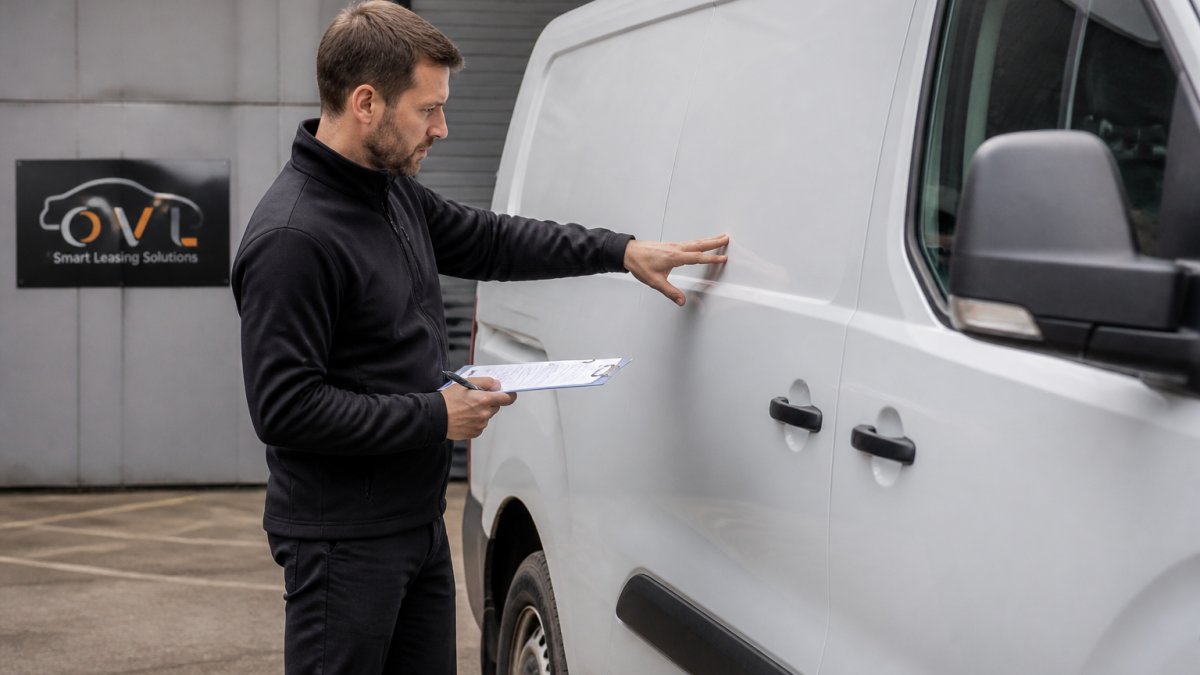
The inspection is where penalties happen. Your leasing company will check for damage, mechanical issues, and cleanliness. Preparing thoroughly reduces the risk of unexpected charges.
Schedule your inspection appointment well in advance. Most leasing companies require at least two weeks' notice. Confirm the location and time in writing.
Before the inspection day, clean the van thoroughly:
- Wash the exterior
- Clean all windows inside and out
- Vacuum the interior and remove debris
- Wipe down dashboard and trim
- Empty all storage compartments
- Remove any stickers or signwriting or decals
Check mechanical systems yourself first:
- Ensure all lights work (headlights, tail lights, brake lights, indicators)
- Test windscreen wipers and washers
- Verify the horn functions
- Check tyre tread depth and condition
- Confirm all mirrors are intact and adjustable
- Test heating and air conditioning
Document the van's condition with photographs before the inspection. Take pictures of the exterior from multiple angles, the interior, the mileage, and any existing damage. This creates a record if disputes arise later.
Attend the inspection in person if possible. This lets you discuss any findings immediately and understand what the inspector is noting.
Know What Counts as BVRLA Fair Wear and Tear on Vans
Fair wear and tear is defined by industry standards, not by your leasing company's opinion alone. Understanding these standards protects you from inflated damage charges.
BVRLA Fair Wear and Tear Standards sets the industry benchmark for what constitutes acceptable wear on lease vehicles. These standards apply across most UK leasing agreements.
BVRLA fair wear and tear typically includes:
- Light scratches and scuffs on paintwork (less than 25mm)
- Minor stone chips on the windscreen (under 40mm)
- Small dents that don't affect function (under 15mm)
- Worn seat fabric from normal use
- Faded trim or rubber seals from sun exposure
- Minor corrosion from normal weathering
- Light dust or dirt inside the van
What does NOT count as fair wear and tear:
- Dents over 15mm in any dimension
- Cracked or broken windows (except minor chips)
- Torn upholstery or seats
- Rust or corrosion beyond surface level
- Missing or damaged mirrors
- Broken lights or indicators
- Mechanical faults or fluid leaks
- Cigarette burns or stains
- Graffiti or permanent marks
If you spot damage approaching the fair wear and tear boundary, repair it before return. The cost of a small repair is usually less than the penalty charge.
Your leasing company should follow BVRLA standards. If they claim damage beyond the standards, ask them to justify it against the official guidelines.
Resolve Any Issues Before Returning Your Leased Van
Finding problems early gives you time to fix them affordably. Waiting until inspection day means paying the leasing company's repair rates, which are typically higher than independent workshops.
Common issues to address before return:
- Mechanical problems: Get a diagnostic check at an independent garage. Small repairs now prevent larger charges later.
- Bodywork damage: Minor dents and scratches under fair wear and tear limits don't need repair. Larger damage should be fixed by a qualified bodyshop.
- Interior wear: Torn seats or damaged trim may qualify for repair if they exceed fair wear and tear definitions.
- Fluid leaks: Have a mechanic check for and repair any leaks. Returning a van with active leaks guarantees penalty charges.
- Tyre condition: Replace tyres if tread is below 1.6mm (the legal minimum) (Tyre defects and damage: HGVs, buses and trailers). Many leasing companies charge extra for worn tyres.
Get written quotes for any repairs. This helps you decide whether to fix issues yourself or accept the penalty charge.
For minor cosmetic issues, weigh the repair cost against the likely penalty. Sometimes it's cheaper to accept the charge than to repair.
Arrange Your Van Return and Next Steps
Contact your leasing company at least four weeks before your planned return date. Confirm the return location, date, and time in writing.
Most leasing companies offer return locations in major cities and regions. If Brightwell Baldwin isn't near a return centre, ask about mobile inspection options or alternative locations.
Before you return the van, ensure:
- All paperwork is ready (lease agreement, service records, MOT)
- The van is clean inside and out
- The fuel tank is full
- All keys and documents are present
- You've photographed the final condition
- You understand what charges, if any, will apply
At return, request a written inspection report. This documents the van's condition and any damage noted. Keep this for your records.
After return, your leasing company typically sends a final invoice within 4-6 weeks. This includes any excess mileage charges, damage assessments, or additional fees. Review it carefully against your lease agreement and fair wear and tear standards.
If you disagree with charges, contact the leasing company within 14 days. Provide your photographs and evidence. Many disputes are resolved through discussion.
OVL Group helps businesses across Oxfordshire and beyond manage fleet transitions smoothly. If you're planning your next van lease or exploring electric van options, Van Leasing Special Offers shows current options that might suit your business better. Our team also supports salary sacrifice schemes and whole-life cost planning, so you know exactly what your fleet costs before committing.
Returning a leased business van without penalties is achievable with planning. Know your agreement, prepare thoroughly, and follow the standards. Most returns happen without issue when you take these steps seriously.
| Step | Action | Timeline |
|---|---|---|
| 1 | Review lease agreement carefully | 8 weeks before return |
| 2 | Create and complete checklist | 6 weeks before return |
| 3 | Calculate total mileage vs allowance | 6 weeks before return |
| 4 | Address mechanical or damage issues | 4-6 weeks before return |
| 5 | Contact leasing company to confirm return | 4 weeks before return |
| 6 | Clean van thoroughly | 1 week before return |
| 7 | Photograph van condition | 2-3 days before return |
| 8 | Attend inspection appointment | Return date |
| 9 | Request written inspection report | Return date |
| 10 | Review final invoice | 4-6 weeks after return |
Frequently Asked Questions
What is BVRLA fair wear and tear for a leased van?
BVRLA (British Vehicle Rental and Leasing Association) standards define fair wear and tear as minor cosmetic damage that occurs through normal use: light scratches, small dents, worn paint, and minor stone chips. Damage beyond this, deep dents, large scratches, broken windows, or interior stains, typically incurs charges. Your lease agreement should specify the exact standards applied. Review these before return to avoid unexpected invoices.
What happens if I exceed my business van lease mileage allowance?
Exceeding your mileage allowance usually results in per-mile charges, typically ranging from a few pence to several pounds per mile depending on your lease terms. These charges are calculated at return and can be substantial if you've significantly overrun your allowance. Check your contract for the exact rate, monitor your odometer regularly, and plan your return date to minimise overage. Some leasing companies offer mileage adjustment options before return if you anticipate going over.
How far in advance should I arrange my leased van return?
Contact your leasing company at least 4-6 weeks before your lease end date to schedule the return inspection and handover. This timeline allows you to address any issues discovered during pre-return checks, arrange transport if needed, and confirm all documentation. Last-minute arrangements may limit your options for damage remediation or create scheduling conflicts. Your lease agreement will specify notice requirements, so check that first.
What documents do I need when returning a leased business van?
Bring your lease agreement, both vehicle keys, service records, and any warranty documentation. Have your final odometer reading recorded and photographed for mileage verification. Ensure all outstanding maintenance has been completed and documented. Your leasing company will provide a return checklist; use it to confirm you have everything before the inspection appointment. Missing documents can delay the return process and final settlement.


