


Table of Contents
- Understanding Clean Air Zone Regulations for Businesses
- Using the UK Clean Air Zone Vehicle Checker
- Clean Air Zone Charges for Business Vehicles
- Creating a Clean Air Zone Compliance Checklist for Businesses
- Electric Vans for Business Fleets: Meeting CAZ Standards
- Steps to Register and Manage CAZ Payments
- Common Mistakes to Avoid When Managing CAZ Compliance
- Frequently Asked Questions
Last Updated: October 10, 2026
Understanding Clean Air Zone Regulations for Businesses
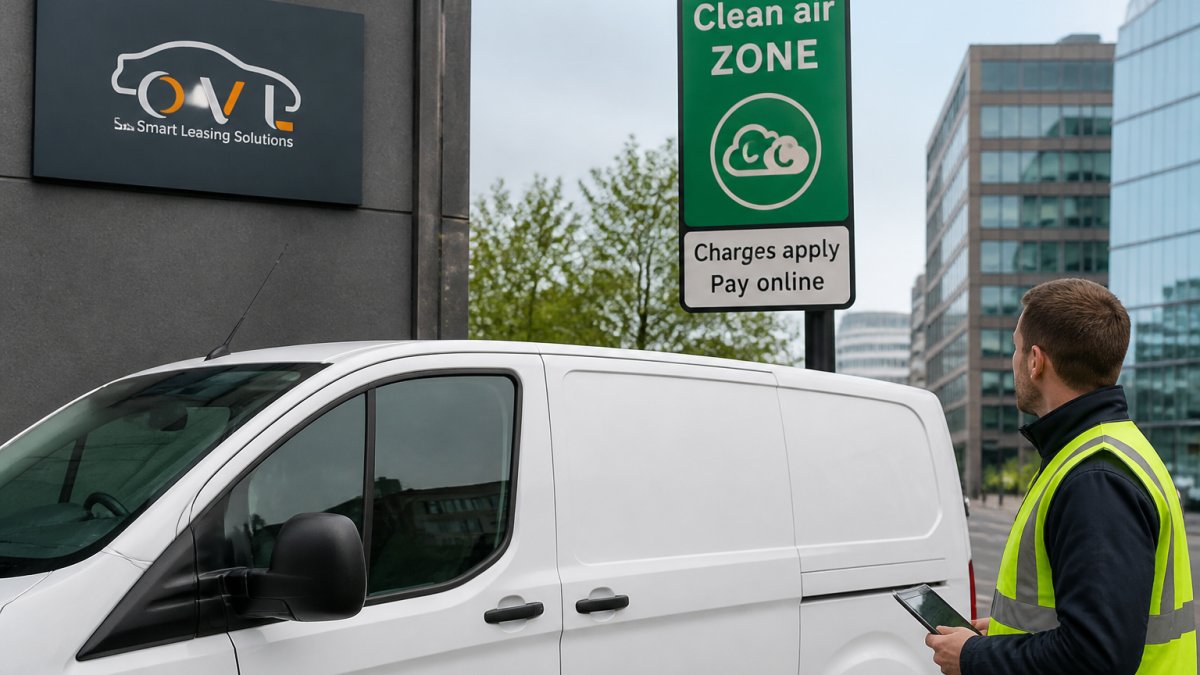
Clean air zone regulations are rules that control which vehicles can drive in certain UK city areas to reduce pollution (Clean Air Zones). These zones charge businesses for operating older, more polluting vehicles during peak times. The regulations exist to improve air quality in busy urban centres where pollution levels exceed safe limits.
Several UK cities have implemented clean air zone regulations. Your business needs to understand which zones affect your fleet and what charges apply. Non-compliance can result in daily penalty charges that quickly add up across multiple vehicles.
At OVL Group, we help fleet managers navigate these regulations and transition to compliant vehicles. Our whole life cost analysis shows that upgrading to cleaner vehicles often costs less than paying daily charges over time.
Using the UK Clean Air Zone Vehicle Checker
The UK Clean Air Zone vehicle checker is an online tool that tells you whether your vehicle meets emissions standards for specific zones. You enter your vehicle registration number and the tool instantly shows if your vehicle is compliant or subject to charges.
This tool is free to use and available on the government's official website. It covers all active clean air zones across the UK. The checker displays:
- Your vehicle's emissions category
- Which zones charge your vehicle
- The daily charge amount for each zone
- Exemptions or discounts you may qualify for
Most fleet managers check their entire vehicle fleet before planning upgrades. The information helps you calculate the true cost of keeping older vehicles versus upgrading to cleaner alternatives.
Clean Air Zone Charges for Business Vehicles
Clean air zone charges vary by vehicle type and emissions category. Vans and larger vehicles typically face higher daily charges than cars. The charges apply every day your vehicle enters the zone, including weekends.
Current charge structures differ by city. Buses and coaches often qualify for exemptions or reduced charges.
Your business pays charges automatically through the zone's payment system. Many fleet managers budget for these costs quarterly or annually based on their vehicle usage patterns. The charges accumulate quickly if you operate multiple non-compliant vehicles across several zones.
OVL Group's Electric / Hybrid Leasing options help businesses eliminate these charges entirely, whilst our Van Leasing Special Offers provide competitive rates on compliant vehicles. Our whole life cost analysis includes clean air zone savings alongside fuel, maintenance, and tax benefits.
Creating a Clean Air Zone Compliance Checklist for Businesses
A clean air zone compliance checklist helps your team track which vehicles are compliant and which require action. This prevents accidental breaches and ensures consistent policy across your fleet.
Your checklist should include:
- Vehicle registration number and emissions category
- Which zones the vehicle enters regularly
- Daily charge cost for each zone
- Exemption eligibility status
- Planned replacement or upgrade date
- Responsible team member for monitoring
Use this checklist monthly to track compliance status. Update it whenever you add or remove vehicles from your fleet. Share it with drivers and route planners so they understand the cost implications of vehicle selection.
| Vehicle Type | Typical Daily Charge | Compliance Action |
|---|---|---|
| Euro 4 Van | £12-15 | Upgrade or pay charges |
| Euro 5 Van | £0-8 | Monitor zone changes |
| Electric Van | £0 | Compliant, no charges |
| Euro 4 Car | £8-12 | Upgrade or pay charges |
Keep records of all charge payments and exemption applications. These documents support your business's compliance efforts if HMRC or local authorities request evidence.
Electric Vans for Business Fleets: Meeting CAZ Standards
Electric vans meet clean air zone standards in every UK zone because they produce zero direct emissions. This eliminates daily charges and provides certainty for long-term fleet planning.
Electric vans are exempt from clean air zone charges across all designated zones. This means your business saves money immediately upon switching to electric vehicles. The savings compound over the vehicle's lifetime as you avoid accumulating daily charges.
Modern electric vans offer:
- Lower maintenance costs than diesel vans
- Tax-efficient salary sacrifice options for employees
Many field service businesses and domiciliary care providers find that electric vans suit their operational patterns. Overnight charging at depots is straightforward.
OVL Group specialises in electric van leasing tailored to your fleet needs. Whether you're looking to transition your entire fleet or test electric vehicles before committing, our Electric / Hybrid Leasing service and Lease Used Electric Vehicles options provide flexible solutions at competitive rates. Our team analyses your current vehicle usage patterns and recommends the right electric van mix for your business. We handle all the compliance details, so your team focuses on operations.
Steps to Register and Manage CAZ Payments
Registering for clean air zone payments requires you to set up an account with the relevant zone operator. The process is straightforward online.
Start by visiting the clean air zone payment portal for your specific zone. Create an account using your business details and vehicle registration numbers. The system will automatically calculate daily charges based on your vehicle's emissions category.
Next, set up a payment method. Most zones accept direct debit or credit card payments. You can choose to pay per journey or set up automatic monthly payments. Automatic payment is simpler for businesses with regular zone usage.
Add all your fleet vehicles to your account. This allows the system to track charges across your entire operation. You can view payment history and download invoices for accounting purposes.
Monitor your account regularly. Check for any vehicles approaching exemption eligibility dates or new zone changes. Update your vehicle list whenever you add or remove vehicles from your fleet.
Keep your payment account current to avoid penalties. Late payments incur additional charges and can affect your business's compliance record. Set calendar reminders for payment deadlines if you're not using automatic payments.
Common Mistakes to Avoid When Managing CAZ Compliance
The biggest mistake businesses make is assuming their vehicles are compliant without checking. Checking your fleet early gives you time to plan replacements strategically.
Another common error is underestimating the total cost of charges. Calculate your true operational cost before deciding whether to pay charges or upgrade.
Some fleet managers fail to update their vehicle records when they add or remove vehicles. This creates gaps in coverage and unexpected charges for unregistered vehicles. Maintain accurate records and update your zone account immediately when your fleet changes.
Ignoring exemptions and discounts is another costly mistake. Certain vehicle types, emergency services, and specific operators qualify for reduced charges or exemptions. Check your eligibility and apply for available discounts to reduce your costs.
Many businesses delay upgrading vehicles until charges become unbearable. Planning ahead allows you to spread replacement costs across multiple years and negotiate better leasing terms. Waiting until the last moment limits your options and increases costs. OVL Group's Vehicle Leasing Special Offers and Van Leasing Special Offers provide excellent value when you plan your fleet transition strategically.
Failing to brief your drivers on clean air zone rules causes accidental breaches. Drivers need to understand which zones apply to which vehicles and why compliance matters. Regular training prevents costly mistakes and supports your compliance culture.
Clean air zone regulations affect how your business operates vehicles in UK city centres. The charges accumulate quickly for non-compliant vehicles, and penalties for late payment compound the problem. Strategic planning now protects your business from unexpected costs and compliance issues.
OVL Group helps businesses like yours transition to compliant fleets through tailored leasing solutions. Whether you're upgrading to electric vehicles or switching to newer compliant models, our competitive leasing rates and whole life cost analysis demonstrate how transitioning eliminates clean air zone charges whilst reducing fuel and maintenance expenses. We provide dedicated support throughout the transition, ensuring your fleet meets all regulatory requirements. Get started with OVL Group and optimise your fleet for both compliance and cost efficiency.
Frequently Asked Questions
How can I check whether my business vehicles are affected by Clean Air Zone regulations?
Use the UK Clean Air Zone vehicle checker on the government portal by entering your vehicle registration number. The tool instantly shows whether your vehicle meets the emissions standard for zones in your operating area. Check regularly, as CAZ coverage expands, and keep records for your compliance checklist.
What are the typical Clean Air Zone charges for business vehicles?
Charges vary by zone and vehicle type. Rather than estimate costs, contact your local authority or use the government's CAZ checker to see exact charges for your routes. Many businesses find that switching to compliant vehicles or electric alternatives eliminates charges entirely and reduces fuel costs, making the transition financially viable over time.
Can electric vans help my business meet Clean Air Zone requirements?
Yes. Electric vans are exempt from Clean Air Zone charges and meet all emissions standards. They also reduce fuel costs and maintenance expenses. For field service companies and domiciliary care providers managing fleets of 50+ vehicles, electric vans can significantly lower whole life costs. OVL Group offers electric van leasing with salary sacrifice schemes to make the transition cost-effective for your business.
What exemptions or discounts are available for Clean Air Zone compliance?
Some vehicle types, including certain specialist vehicles and those used by disabled passengers, may qualify for exemptions. Discount schemes vary by local authority. Check your local CAZ scheme rules for specific exemptions. Switching to compliant or electric vehicles is often more cost-effective than relying on exemptions, particularly for regular commercial use across multiple zones.


